Custom ESP32-S3 development board — professionally manufactured by JLCPCB. A far cry from where it all started. It Started in a School Science Lab — Around 1998 Most people who get into electronics start with a kit, a tutorial, maybe a breadboard and some LEDs. I started by sneaking ferric chloride out of a school science lab to etch my first PCB. That was around 1998. I was living in the Maldives — a small island nation in the Indian Ocean — where there was no electronics supply chain, no maker community, no local PCB fab. Just a chemistry cabinet at school, a copper-clad board from somewhere, and a lot of curiosity. This post is about what the next 25+ years of PCB prototyping looked like from there. The early wins with proper chemicals, the years of improvisation when those chemicals disappeared, the real injuries, the failed boards, and finally — the moment JLCPCB changed ever...
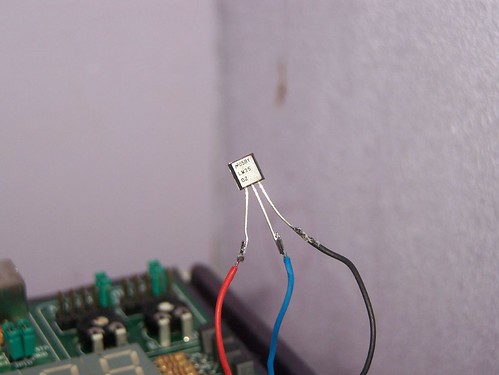
I did some tests with LM35DZ, which is a temperature sensor with analog out put. I connected it to micro controller's ADC (Analog to Digital Converter). The out put of the sensor is 10mV/°C After some calculations, ADC value was converted to centigrade.
Finally it works, i am able to monitor the room temperature from my LCD Display. At beginning i used an my multimeter to differentiate the sensor value and actual room temperature, the meter reading and LCD reading was perfect. After a while i got an idea to detect temperature and give alarm or warning. I modified the code and little bit and tadaaaaa i can verify the temperature variation. Actually i did was if the temperature is greater than 40°c, give an warning, lit an LED or drive a buzzer.
I think this is a cool one for these days. Cause its hot..
Finally it works, i am able to monitor the room temperature from my LCD Display. At beginning i used an my multimeter to differentiate the sensor value and actual room temperature, the meter reading and LCD reading was perfect. After a while i got an idea to detect temperature and give alarm or warning. I modified the code and little bit and tadaaaaa i can verify the temperature variation. Actually i did was if the temperature is greater than 40°c, give an warning, lit an LED or drive a buzzer.
I think this is a cool one for these days. Cause its hot..
Comments